Air Fryer Mistakes Beginners Should Avoid
Air fryer mistakes usually come from treating the appliance like a tiny oven, a deep fryer, and a magic shortcut at the same time. It can brown food quickly, but it still needs space, timing, and a little attention. Beginners often blame the machine when the real issue is crowding, uneven cuts, too much oil, or waiting too long to clean the basket.
A calmer first month with an air fryer comes from learning what the basket can and cannot do. The appliance rewards small batches and visible checks. It punishes guesswork when food is stacked, wet, or ignored until the timer ends. The goal is not perfect cooking; it is fewer avoidable problems while you learn how your model behaves.
Crowding the air fryer basket is the first mistake sets the practical boundary for the article: ordinary tools, limited time, and a result the reader can repeat without buying a shelf of supplies. That practical boundary matters. It gives enough judgment to know when to stop, dry, reheat, rinse, or simplify.
Crowding the air fryer basket is the first mistake
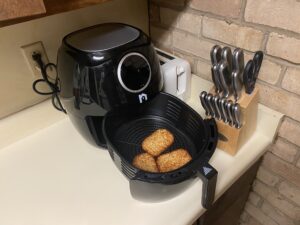
The air fryer needs moving hot air to touch the food. When the basket is packed tightly, the pieces in the middle steam while the outer pieces brown. This is why frozen fries, potatoes, chicken strips, and vegetables can come out pale in some spots and overdone in others.
Beginners often crowd the basket because smaller batches feel inefficient. In practice, two loose batches can finish better than one stuffed batch that needs extra shaking and extra time. Leave enough room for pieces to shift when you shake the basket.
For crowding the air fryer basket is the first mistake, watch one visible cooking clue: color, steam, oil pooling, or uneven edges. That clue tells you more than the timer alone when the first batch behaves differently than expected in the basket. Use crowding the air fryer basket is the first mistake as a checkpoint, then move on only when the result looks stable enough to repeat.
| Decision | Beginner check | Why it matters |
|---|---|---|
| Basket space | Food can move when shaken | Hot air reaches more surfaces |
| Food size | Pieces are similar thickness | Timing becomes more predictable |
| Oil amount | Food is lightly coated, not wet | Browning improves without smoke |
Using too much oil creates smoke and soggy spots
Air fryer food usually needs less oil than pan frying. A light coating can help seasoning stick and improve browning, but excess oil can pool under the basket or drip into the drawer. That can create smoke, sticky residue, and greasy food that never becomes crisp.
Use oil as a surface tool, not a bath. Toss food in a bowl before it goes into the basket, or spray lightly from a distance. If the food already contains fat, such as sausage or some chicken cuts, start with less oil and watch the first batch closely.
For using too much oil creates smoke and soggy spots, keep the next batch comparable. Change piece size, basket space, temperature, or oil amount one at a time so the result teaches something useful without confusing the cause. Using too much oil creates smoke and soggy spots is strongest when the reader can compare one clear before-and-after cue instead of guessing from memory.
Skipping the shake makes cooking uneven
Shaking or turning is not busywork. It exposes new sides of the food to heat and keeps small pieces from sitting in the same contact points for the whole cook. Potatoes, vegetables, nuggets, tofu, and chickpeas all benefit from a mid-cook movement.
The timing does not have to be exact. For most beginner foods, check around halfway through. If pieces are browning unevenly, shake again near the end. The basket tells you more than the recipe timer.
For skipping the shake makes cooking uneven, check the basket before adding more minutes. Food can look underdone because it needs shaking, turning, drying, or more space rather than a much longer cook. This keeps skipping the shake makes cooking uneven practical for a normal kitchen or driveway, not just for an ideal weekend project.
- Shake small loose foods halfway through.
- Turn larger pieces with tongs instead of tossing them roughly.
- Check thin edges early because they brown first.
- Keep notes when your model cooks faster than expected.
Trusting one recipe time can overcook dinner
Air fryer timing changes with basket size, food thickness, starting temperature, and how full the basket is. A recipe might say twelve minutes, but your chicken strips or potato wedges may need more or less. The first attempt should include visual checks, not blind trust.
Use recipe times as a range. Start checking before the lower end if the pieces are small. Add time in short increments if the middle still needs cooking. For meat and fish, a thermometer is more reliable than color alone.
For trusting one recipe time can overcook dinner, treat the first attempt as a calibration round. The process becomes easier once you know whether your air fryer runs hot, browns slowly, or needs smaller batches. If the result is still uncertain, pause here and repeat the gentlest useful pass before adding another variable or extra product.
- Set the timer slightly short for the first attempt.
- Check color, texture, and internal doneness.
- Shake or turn the food if browning is uneven.
- Add two or three minutes only when needed.
- Write down the time that worked for your basket.
Putting wet food in the basket weakens browning
Moisture is the quiet reason many air fryer batches disappoint. Wet vegetables, rinsed potatoes, saucy chicken, and thawing frozen food can steam before they brown. Patting food dry is not glamorous, but it can change the result more than adding another seasoning.
If a marinade is very wet, let excess drip off before the food enters the basket. If vegetables were washed, dry them on a towel first. This step matters most when you want crisp edges instead of soft, damp surfaces. That timing decision pairs well with an air-fryer vegetable method because a fast meal still needs texture, doneness, and cleanup to stay manageable.
For putting wet food in the basket weakens browning, separate texture from flavor while troubleshooting. If the food tastes good but feels soft, the fix is usually moisture, crowding, or cooling, not more seasoning. That restraint makes the advice easier to trust because each step earns its place in the routine and avoids unnecessary rework.
Dry surfaces brown faster, and that is where the air fryer earns its space on the counter.
Cleaning too late makes the next batch worse
Old crumbs and oil residue can burn during the next cook. They also make the basket harder to clean later. Let the basket cool enough to handle safely, then remove loose crumbs and wash the parts according to the manufacturer instructions.
Do not scrape nonstick surfaces with harsh tools. Use warm water, mild soap, and a soft sponge unless your manual says otherwise. A clean basket protects flavor, smoke control, and the life of the coating.
For cleaning too late makes the next batch worse, let cleanup influence the cooking choice. Sticky sauces, loose crumbs, and excess oil can make the meal harder than a simpler dry seasoning would. A simple note after this step also helps the next attempt start from experience rather than trial and error.
Learning one air fryer food at a time builds confidence
Trying ten recipes in the first week can make the air fryer feel random. Pick one food category first: potatoes, chicken pieces, vegetables, tofu, or frozen snacks. Repeat it a few times while changing only one variable, such as cut size or cook time.
Air fryer mistakes beginners should avoid become easier to see when the routine is simple. Keep batches loose, use modest oil, check before the timer ends, and clean the basket before buildup hardens. Those habits make every later recipe easier.
For learning one air fryer food at a time builds confidence, write down the time that worked for your basket size. That small note makes the same food more reliable when it comes back into the weeknight rotation. The safest version is the one that improves the result without creating extra mess, heat, moisture, or wear.
Once the basics are steady, the air fryer becomes less mysterious. The best beginner progress comes from small checks repeated often, not from chasing complicated recipes before the basket behavior is familiar.