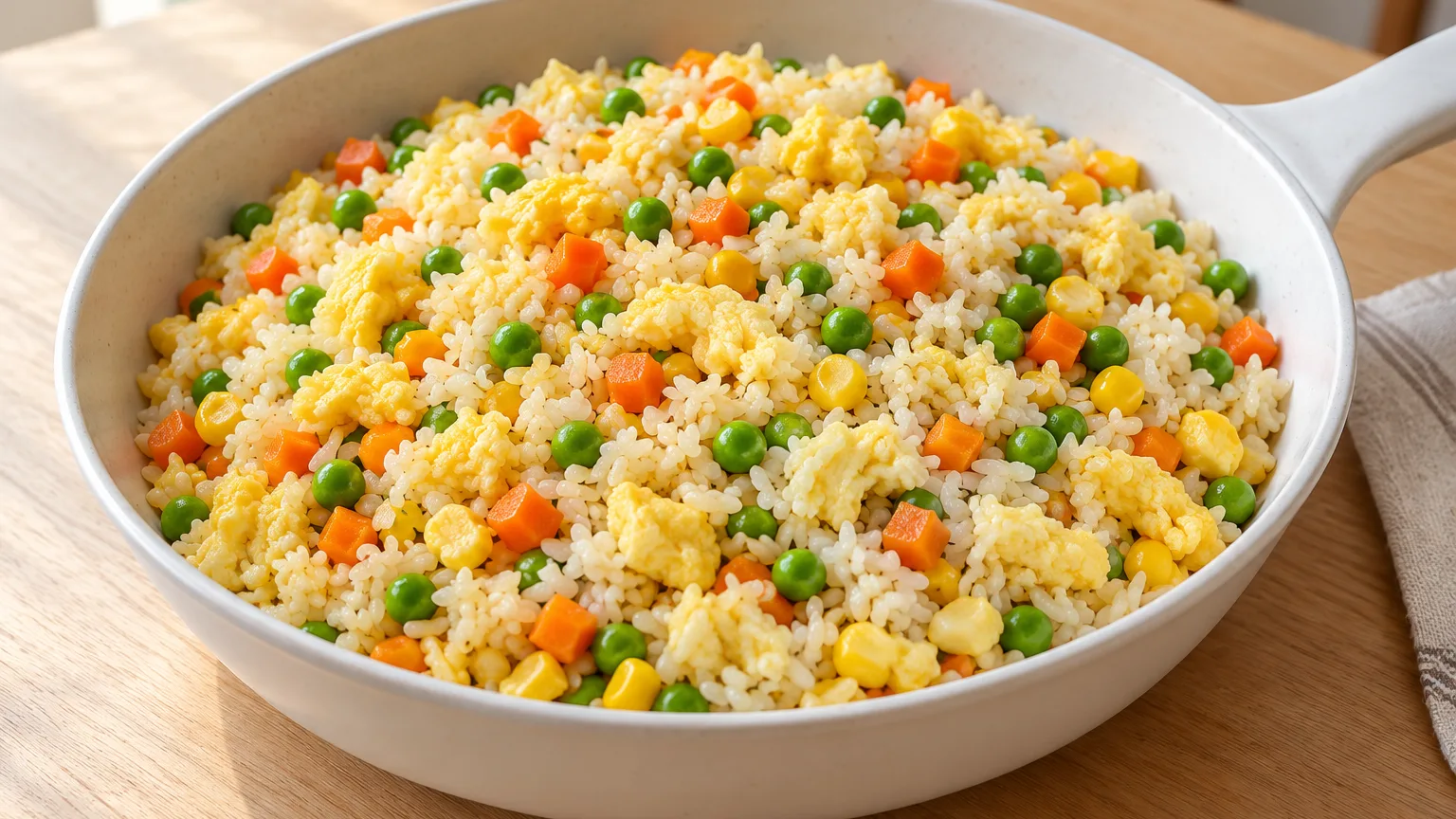

A carton of eggs is useful when a meal is almost there: cooked rice needs something substantial, potatoes need a topping, or a tortilla needs a filling. Whether the result is inexpensive depends on the local price of eggs and the food already at home. Start with that food and avoid buying a list of extras merely to justify the carton.
Three meals from ordinary leftovers
For a rice-and-vegetable pan, start with 1 cup of cooked, properly refrigerated rice and about 1 cup of frozen mixed vegetables. Heat both thoroughly in a skillet, move them aside, then scramble two eggs in the open space until set. Mix and season. This makes a modest meal for one hungry adult or two smaller portions; add beans or more vegetables if needed. If the rice has been left out too long, discard it. Cooking cannot correct an unsafe storage history.
For a potato plate, cook one diced medium potato until tender, then add chopped onion or cabbage. Serve with two cooked eggs. A spoonful of salsa changes the flavor without requiring another pan. For a tortilla meal, warm a half cup of canned beans, scramble two eggs until set, and divide between two small tortillas. Add a tomato or greens if available. Those examples use eggs differently: mixed through the rice, placed on the potato, or held inside a wrap. Adjust the amount to the people eating; the examples are not a nutrition prescription.
The order matters more than a clever seasoning. Potatoes need time to soften before eggs are added; beans need only warming. Prepare the filling before heating tortillas so the bread does not dry while you cook. For the rice pan, spread the rice and vegetables out enough that the center heats too. A crowded, shallowly warmed skillet is a poor place to hide cold leftovers under newly cooked egg.
If a meal needs to feed two adults rather than one, check the quantities before cooking. Two eggs and one potato may be a light dinner; a second potato, more beans or a larger vegetable portion may make it workable. Count what you already own and what you would have to buy. A carton of eggs is inexpensive per meal only if the rest of the meal is available and the eggs are used before they go to waste.
Keep the egg and the leftovers safe
USDA's egg guidance says to refrigerate shell eggs, cook scrambled eggs until firm, with no runny egg remaining, and cook egg dishes such as casseroles to 160°F (71°C) in the center. If a preparation calls for a raw or undercooked egg, use a pasteurized egg product as the guidance directs, especially when serving someone at higher risk of foodborne illness. A soft yolk may be a texture preference, but it is not the same as that fully cooked guidance.
Leftovers need their own check before the egg goes in. USDA says to refrigerate perishable food within two hours, or within one hour above 90°F (32°C), and use refrigerated leftovers within three to four days. Heat leftovers to 165°F (74°C). An egg does not make food safe after a missed storage window, and an ordinary smell does not prove that it is safe.
Break cooked rice into small clumps while it is cold, then heat it evenly. Keep raw egg and its utensils away from the finished plate. If an egg cracks in its carton or you are unsure how long a cooked mixture sat out, do not make a budget decision at the expense of a safe one. A can of beans or a freshly cooked starch is a better fallback than trying to rescue uncertain leftovers.
If eggs are expensive this week, beans or another available protein may be the better buy. Compare the cost of the whole meal, including the rice, vegetables or bread you already have, before treating any one ingredient as the budget answer.
Choose the version that solves tonight
If you have ten minutes and safe cooked rice in the fridge, make the rice pan. If you have twenty minutes and raw potatoes, start them first. If you need to carry the result for lunch, cook and chill the filling promptly, then assemble a tortilla when you are ready to eat so it does not turn soggy. Different leftovers and schedules lead to different egg meals; there is no one cheapest recipe at every store.
Price the complete plate before calling it cheap
Write the amount of eggs, rice, potatoes, beans and vegetables that will actually be served. Use the package price and the portion used, then include any ingredient bought only for that meal. Food already at home still has value, although it may make tonight’s cash cost lower.
Record the planned use for the remaining eggs and opened ingredients. A low per-serving estimate depends on those foods being used safely before they spoil. If the quantities make a meal too small for the people eating, adjust the starch, beans or vegetables on paper before cooking.
After the meal, write down only one useful observation: how many people the amounts fed, whether the carton was finished, and what remained. That helps you buy a sensible carton size next time. If the household rarely eats eggs, a larger carton with a lower unit price can still be the more expensive choice after waste.