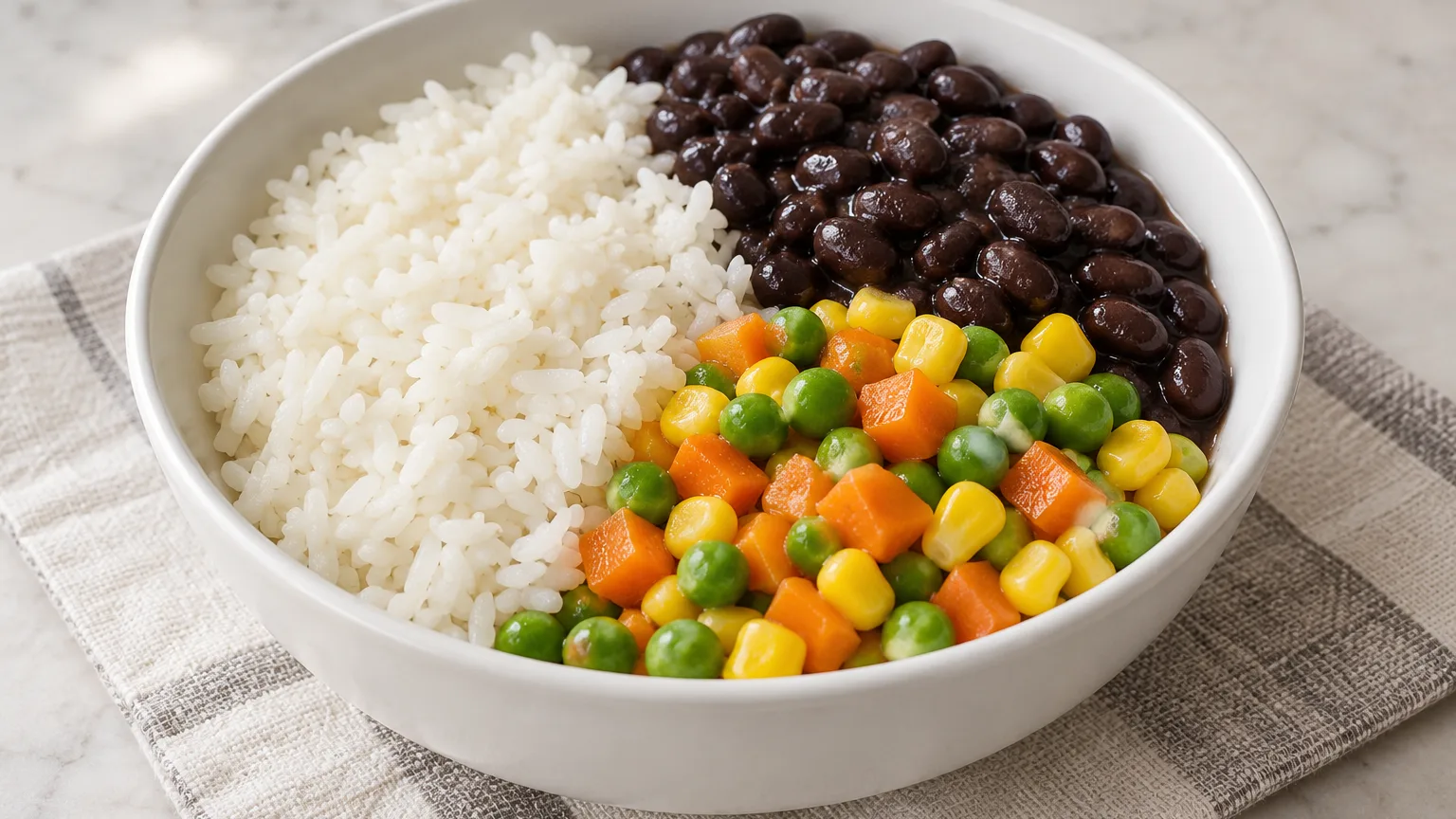

“Cheap and healthy” cannot be one fixed shopping list. Prices differ by store and season, and people need different foods. It is more useful to look at several meals you can assemble from ordinary ingredients, then check your local prices and what is already in the cupboard.
Beans and rice with a vegetable
For two bowls, start with half a cup of dry rice, one drained 15-ounce can of beans and about two cups of chopped or frozen vegetables. Cook the rice by its package directions and heat the beans and vegetables through. Salsa, lemon or a little yogurt can finish the bowls. If you have only a small amount of meat, it can be a topping rather than the whole meal. Choose a vegetable you will use again before it spoils, and adjust the portions if two bowls are not enough for your household.
Start the rice before chopping or heating the other ingredients. If the vegetable is frozen, follow its package for the cooking method; if it is fresh and firm, give it enough time to soften. Warm the beans in a separate small pan or alongside the vegetables, then combine the bowls at the table. Keeping a sauce separate lets each person choose the amount and makes a leftover bowl easier to store.
If you have dry beans instead of canned, use a safe preparation method for the exact kind of bean. They are not a quick substitute that will cook in the time rice takes. Check the real portion yield after the first dinner. If there is enough for lunch, move that portion into a shallow container promptly instead of letting it stay on the table during seconds.
Tomato and lentil pasta
For two or three plates, cook eight ounces of dry pasta. Simmer one cup of cooked or canned lentils with a 14-ounce can of tomatoes and a chopped onion until the sauce thickens; stir in a handful of spinach until hot. Combine the pasta and sauce, saving some sauce for lunch if there is enough. If you start with dry lentils, cook them by the package before making the sauce. They will not become tender during a brief pasta finish.
Reserve a little pasta water before draining; it can loosen a thick sauce without opening another ingredient. If the onion needs time to soften, start it before adding tomatoes. Canned lentils save that preparation step, though their price and sodium content vary. If spinach is not available, a vegetable already in the freezer may work, but give it enough time to heat through and let excess water cook off.
Eggs, potatoes and greens
For two plates, cook two diced medium potatoes until tender. Add about a cup of frozen greens and let excess water cook off, then add two eggs and cook until the whites and yolks are firm. This works for dinner as readily as breakfast. If eggs do not suit your household, beans or tofu can take their place. Adjust the amounts for the people eating; these are starting quantities, not prescribed servings.
Small, even potato pieces help the centers cook before the outside burns. Steam them with a splash of water under a lid first if the skillet is dry, then uncover for browning. Put the eggs on only when the greens are hot and the pan is no longer watery. If you replace eggs with tofu or beans, adjust the cooking sequence to that ingredient rather than expecting it to set in the same way.
Use the budget without guessing at nutrition
USDA MyPlate's budget guidance recommends planning, shopping with cost in mind and preparing meals that fit your schedule. These examples put several food groups on the plate, but they are not personalized nutrition advice. Adjust portions and ingredients for allergies, health needs, appetite and available food. Frozen and canned produce can be practical choices; check added sodium or sugar on the label when that matters to you.
Before buying anything for these meals, check for an open bag of rice, a half-used cabbage or beans already on the shelf. Turning those into dinner may save more than chasing a sale on a new ingredient. Refrigerate cooked leftovers promptly and use most within three to four days under USDA guidance.
Turn an example into your own portion plan
Choose one example and write the number of people eating, the amount of its main ingredient already available and the price of anything missing. Decide whether the meal needs a side or a larger portion before shopping. The example is a structure, not a promise that the same quantity or price fits every household.
After cooking, note the actual yield and whether any package remainder has a safe next use. Keep that information with the recipe. The next estimate can then use your store price, equipment and portions instead of starting from a generic “budget meal” label.
Compare the whole dinner cost after choosing the version you will actually cook. A low price for dry lentils is less useful on a night when you have no time to prepare them; an expensive sauce can change the price of an otherwise modest pasta. Note the amount left in each package so tomorrow's shopping list begins with reality. The best repeatable example is the one that fits your pantry, schedule and appetite.