
“Thirty minutes” is useful only if the starting point is clear. Dry pasta, canned beans and washed greens can become dinner in that window. A frozen chicken breast that still needs thawing cannot be slipped into the same plan. Choose a meal from the food and time you actually have, and count washing, chopping and heating the pan, not just the minutes printed beside a recipe.
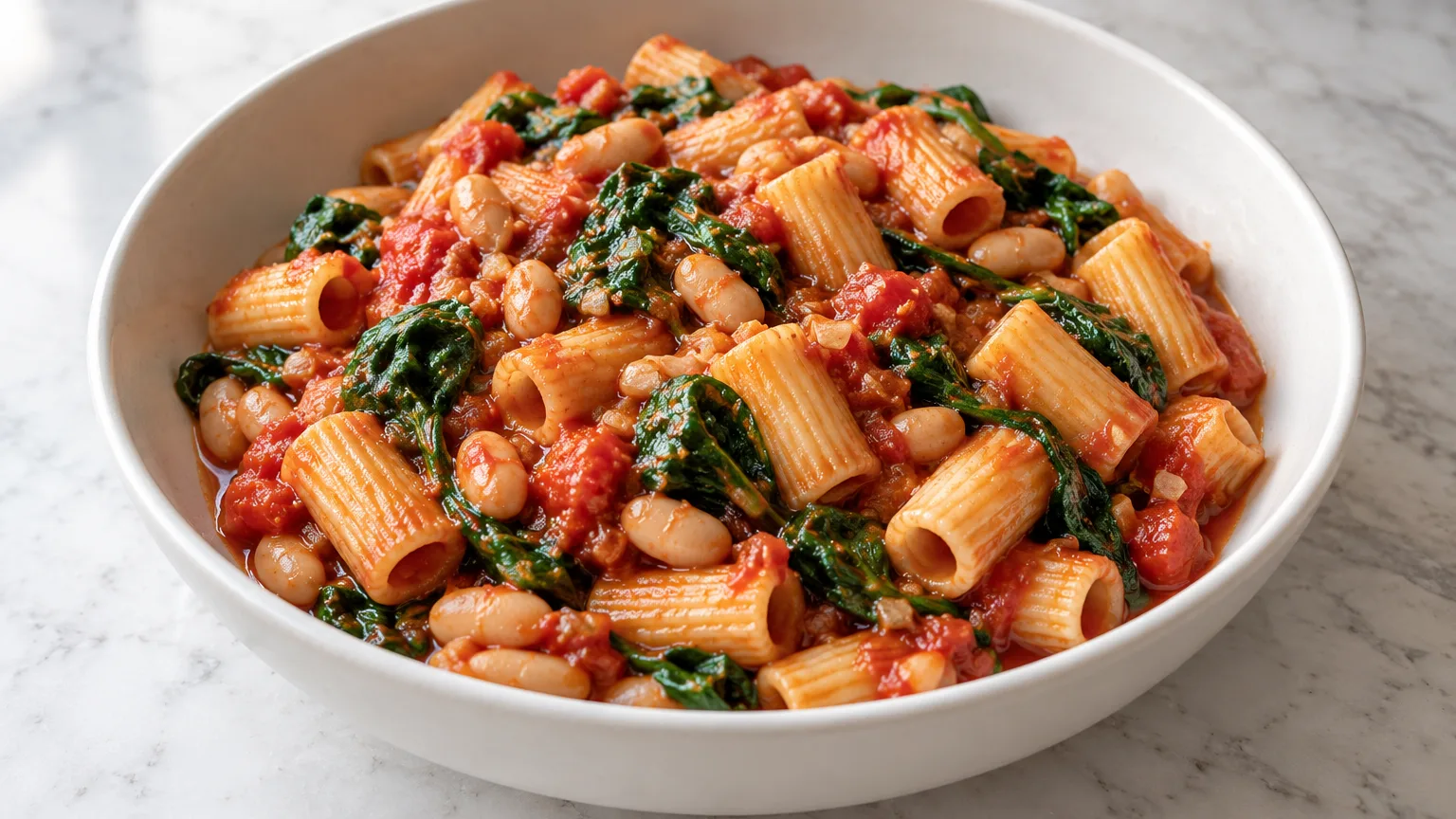
Tomato, white bean and spinach pasta
For two generous servings, gather 6 oz (170 g) dry pasta, one 15 oz (425 g) can of white beans, one 14-15 oz (400-425 g) can of crushed tomatoes, two handfuls of washed spinach, 1 tablespoon olive oil and one garlic clove. Salt, pepper and a little grated cheese are optional. This uses canned beans that are ready to eat; if yours are dry, cook them separately before starting.
- Put a pot of water on to boil. While it heats, drain and rinse the beans, mince the garlic and open the tomatoes.
- Cook the pasta according to its package. In a separate pan, warm the oil over medium heat and briefly cook the garlic without letting it darken. Add the tomatoes and beans; simmer while the pasta cooks.
- Stir the spinach into the sauce until it wilts. Before draining the pasta, reserve a mug of its cooking water. Toss the pasta with the sauce and add a splash of that water if it needs loosening. Taste, then season.
The package determines the pasta time, and the water may take longer to boil on your stove. If you need to wash and trim fresh spinach, count that too. The beans and tomatoes make this a complete pantry plan without asking you to cook raw meat against a deadline.
Black bean and pepper tortillas
For two people, use four small tortillas, one 15 oz (425 g) can of black beans, one bell pepper, half an onion, 1 tablespoon oil and a few spoonfuls of salsa. Cheese, lettuce or plain yogurt can finish the tortillas if you have them. Check the tortilla and salsa labels if you are cooking for someone with an allergy.
- Slice the onion and pepper thinly. Drain and rinse the beans.
- Cook the onion and pepper in the oil in a wide pan over medium heat until tender to your liking. Add the beans and a little salsa; stir until the mixture is hot throughout. If it sticks, add a spoonful of water rather than extra oil.
- Warm the tortillas according to their package and serve with the filling and any cold toppings. Keep cold toppings separate until serving.
This meal is faster when the vegetables are already washed and the beans are canned. It is also easy to scale: use a second can of beans and more tortillas for a larger table, but allow more time or a larger pan to heat the filling.
Rice bowl using rice that is already cooked
Start with refrigerated rice that was cooled promptly after its first cooking, a bag of frozen vegetables and a ready-to-eat protein such as canned beans or tofu labeled ready to eat. Heat the rice and vegetables until steaming hot, following any package directions, and warm the protein separately if its label calls for it. Finish with a sauce you already use, adding it a little at a time. This is a way to use prepared components, not a promise that dry rice will cook in the same 30 minutes.
Cooked rice and other perishable leftovers need prompt refrigeration. FoodSafety.gov advises discarding food left at room temperature beyond two hours, or one hour above 90°F (32°C), and reheating leftovers to 165°F (74°C). If you do not know how old or how the rice was stored, use a fresh quick-cooking base such as couscous or follow a new rice package from the beginning instead.
Decide before the clock starts
Pick one of these paths before you turn on the stove. Check whether the ingredients are thawed, the vegetables are washed, and the base is already cooked. If the protein is raw, follow its safe handling and temperature guidance; do not use a visual shortcut to make it fit the deadline. FoodSafety.gov lists the safe internal temperatures. Frozen poultry, in particular, calls for a different plan: the USDA describes safe thawing methods and says cooking from frozen takes longer.
Your stove and prep speed will change the clock. Notice which step actually takes the most time at home. If it is boiling water, use the tortilla plan. If it is chopping, choose washed greens or frozen vegetables. Match the meal to the evening you have.