
Before making a grocery list, put the food that needs a decision on the counter: an opened sauce, cooked rice, a bag of frozen peas, maybe an unopened can. The goal is one usable dinner and a shorter shopping list. The first decision is whether those foods are still safe to use, not which recipe sounds appealing.
Keep, freeze or discard
Check when cooked food went into the refrigerator and whether it stayed cold. USDA advises refrigeration within two hours of cooking, or one hour when the temperature is above 90°F (32°C), and use within three to four days. Reheat leftovers to 165°F (74°C). If a perishable item missed the time limit or its storage history is unknown, discard it; smell and appearance cannot certify safety. Freeze an eligible portion before its refrigerated window ends if it will not be eaten in time.
For cans, read the label and inspect the package before opening. Bulging, leaking, badly dented or seam-damaged cans are not pantry bargains; USDA says not to use or taste food from them. An unopened, intact shelf-stable can can wait for another meal. An opened can belongs under its label's refrigeration instructions.
Put the items into three groups: safe to use soon, safe to store for later, and discard. Do not move an unknown container from the fridge into the "use soon" group just because you want to save money. Date labels help only when you know the food was stored correctly. Look for the package's own storage instructions on sauces and opened products; different products have different limits.
A freezer bag of vegetables may still be useful even if you do not know when it was bought, provided it has been continuously frozen and its quality is acceptable. A half-used refrigerated sauce needs closer attention to its label and opening date. The point of sorting is to avoid buying a duplicate while keeping safety questions separate from thrift.
One dinner from safe ingredients
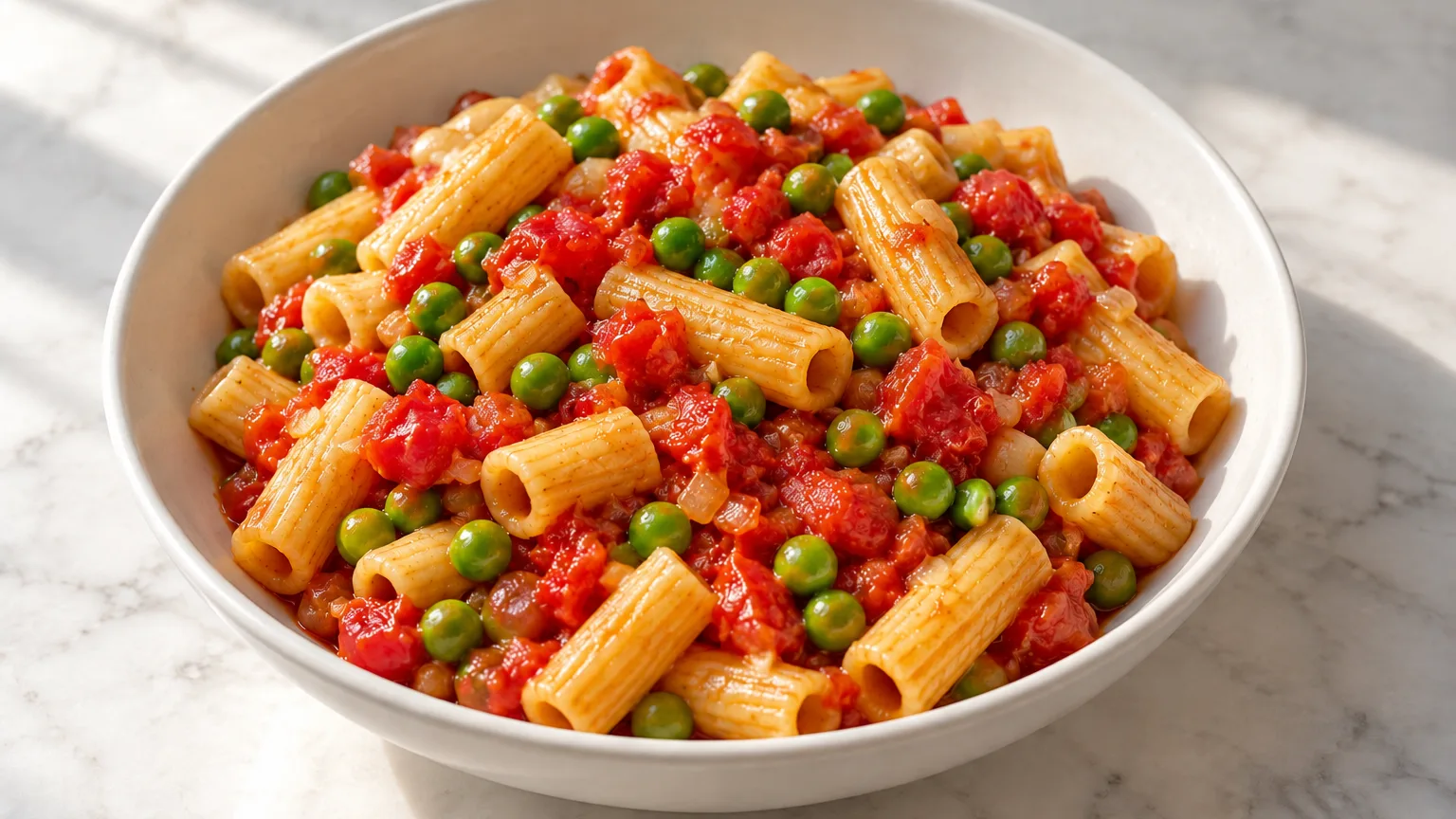
Suppose you have 6 ounces (170 g) of dry pasta, one intact 15-ounce (425 g) can of tomatoes and a cup of frozen peas. Cook the pasta. Simmer the tomatoes with the peas until hot, adding garlic or dried herbs if available, and toss with the drained pasta. This makes roughly two portions without relying on an uncertain leftover. If you also have cooked chicken that was refrigerated promptly and is within its safe window, heat that separately to 165°F (74°C) before adding it. Do not add chicken merely because it looks normal.
The example uses a dry base, a sauce and a frozen vegetable. It does not require buying a fresh ingredient to finish the meal. A different safe combination might be tortillas with warmed canned beans and frozen corn. Choose the meal that uses something perishable soonest, then write the remaining staple on the shopping list only if you will actually need it.
Measure the pasta before cooking rather than emptying the whole box by habit. If the meal is for three people, the quantities may need to grow; if for one, save some dry pasta for another day. If the tomatoes are already opened, use them only within their label's storage guidance. If an ingredient is missing, decide whether the meal works without it or whether it belongs on the list. A pantry dinner should make the next purchase smaller, not create a trip for one garnish.
Make tomorrow's decision easier
Put any extra cooked meal into shallow covered containers and refrigerate promptly. Mark the cooking date on the container; a vague memory of “earlier this week” is not a storage record. If the meal will not be used within the safe window, freeze it instead. Then check the pantry again: the unopened cans and dry pasta that remain can anchor the next list, while the ingredients you actually used show what is worth restocking.
Write the shopping list in amounts tied to meals. "One can of tomatoes for Wednesday" is easier to verify than a broad note saying "pantry staples." Cross off what tonight's dinner consumed, and note what remains: half a bag of peas may be enough for another bowl. Use that information before reacting to a sale. Buying another bag because it is cheap does not save money if the freezer is full and the first bag is forgotten.
Separate available food from a workable meal
Make two short lists. The first is what is actually available, including amounts and storage condition. The second is what the meal still needs for flavor, texture and a sufficient portion. This keeps a nearly empty jar or unsafe leftover from being counted as though it can carry dinner.
Choose the meal only after checking the perishable ingredients and package directions. Write any missing item on the next shopping list, but do not turn that gap into an extra trip unless the meal depends on it. A simple substitution is useful when it fits the recipe and household; otherwise choose a different pantry meal.
Repeat this check before each major shop. It takes a few minutes to inspect the fridge, freezer and cupboard, but it can change what you cook tonight and what you buy tomorrow. If the same opened sauce is repeatedly discarded, buy a smaller package or plan a second use at the time of purchase. That is a more useful budget adjustment than forcing an unsafe leftover into one dinner.