Knife Safety Tips for Beginner Cooks
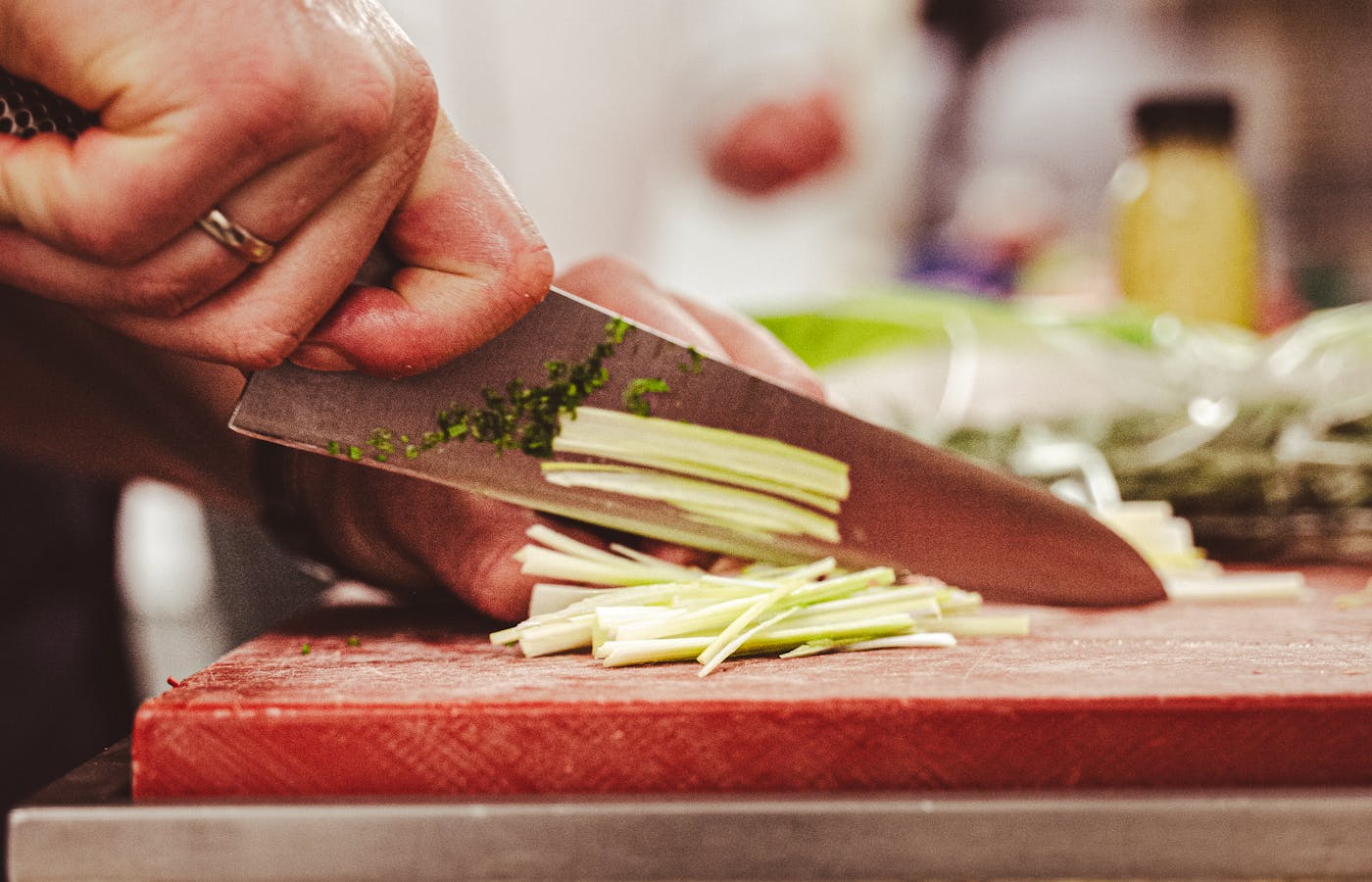
A knife is usually the first tool that makes beginner cooking feel serious. It is also the tool that punishes rushing, wet hands, crowded counters, and awkward ingredients faster than almost anything else in the kitchen. Knife safety is not about being nervous around the blade. It is about making the work predictable before the cutting starts.
Good knife safety tips for beginner cooks are simple enough to repeat on an ordinary weeknight: stable board, dry hands, clear counter, controlled grip, slow cuts, and a safe place for the knife when you pause. Those habits matter more than fancy knife skills.
The safest beginner cook is not the fastest cook. It is the cook who keeps the knife, food, board, and hands under control from the first cut to cleanup.
Knife safety starts with a stable cutting board
Knife safety begins before the knife touches food. A board that slides, rocks, or sits half on the counter creates risk before your technique even matters. Put the cutting board fully on the counter and check that it does not move. If it slides, place a damp towel or non-slip mat underneath. FSIS cutting-board food safety guidance is also a useful reminder to keep boards clean and separated when raw meat is involved.
Clear the space around the board too. Ingredient bags, plates, phones, spice jars, and dirty utensils can crowd your elbows and make you twist while holding a blade. Beginners often focus only on the hand near the knife, but the whole work area affects control.
I like to set a small scrap bowl nearby for peels, stems, and wrappers. It keeps the board from filling with pieces that make the food wobble.
Use a knife that fits the task and your hand
A giant knife is not automatically safer, and a tiny knife is not automatically easier. Use a chef knife or santoku for most vegetables, herbs, and boneless prep. Use a paring knife for small hand-controlled jobs, such as trimming a strawberry or peeling a small piece of fruit. Avoid forcing a knife into a task it is not built to handle.
A dull knife is often more dangerous than a sharp one because it asks for extra pressure. Extra pressure can turn a simple cut into a slip. The knife should move through food with steady control, not a frustrated shove. If a tomato skin, onion, or carrot makes the knife skid, the blade may need sharpening.
The handle matters too. If your hand feels cramped, slippery, or far from the blade, slow down and reset your grip before continuing.
Keep your guide hand in a claw shape
The hand holding the food should not lie flat with fingertips pointing toward the blade. Curl fingertips back slightly and let the knuckles become the guide. This is often called a claw grip. The knife can move near the knuckles while the fingertips stay tucked away from the cutting edge. It may feel slower at first because it is asking your hand to learn a safer shape.
The claw grip may feel odd at first, especially if you learned by pinching food with exposed fingertips. Practice on something forgiving, such as cucumber, celery, zucchini, or a potato cut into a flat-sided piece. Do not start with slippery onions or round tomatoes if your hands are still learning the position.
| Beginner risk | Safer adjustment |
|---|---|
| Board slides while cutting | Use a damp towel under the board |
| Food rolls under the knife | Cut one flat side before slicing |
| Fingertips face the blade | Curl fingers into a claw grip |
| Knife needs force | Sharpen it or switch tools |
Speed can wait. A slow claw grip builds safer muscle memory than fast chopping with exposed fingertips.
Make round and slippery foods easier to control
Round ingredients are tricky because they move. Onions, potatoes, cucumbers, carrots, tomatoes, apples, and squash can roll if they sit on the board as full shapes. Create a flat side first whenever possible. Cut the food in half, place the flat side down, and then continue slicing. That one small step gives the knife and board more stability.
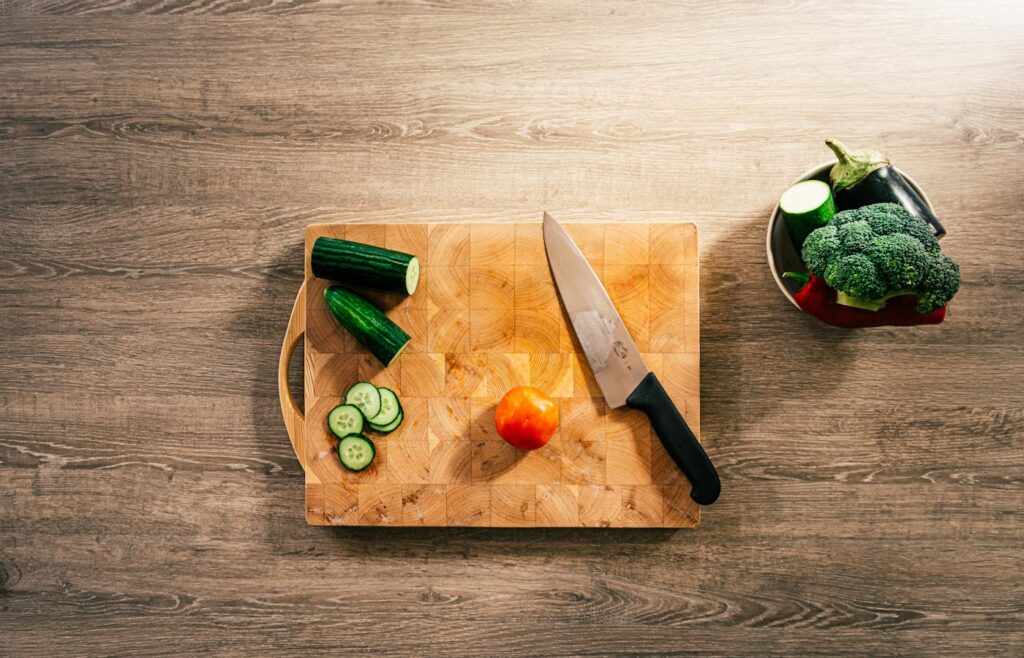
Slippery foods need the same respect. Wet herbs, rinsed vegetables, peeled onions, and juicy tomatoes can shift under the knife. Pat food dry when needed, dry your hands, and keep the handle free from oil or water. If the food is too awkward, pause and choose a different cut or a different knife.
- Cut a flat side before slicing round vegetables.
- Dry wet produce before fast knife work.
- Move scraps off the board when they crowd the cutting area.
- Use a serrated knife for foods with tough skins and soft centers if needed.
- Stop cutting if your hand position feels improvised.
Beginner cooks should slow the knife down when attention drops
Most kitchen knife mistakes happen in ordinary moments: answering a question, watching a pan, checking a phone, hurrying because the food is almost late, or trying to cut while tired. A beginner does not need a complicated rule here. If your attention leaves the board, the knife should stop moving.
Do not cut while looking at the recipe, talking across the room, or reaching for another ingredient. Put the knife down flat on the board with the blade facing away from the counter edge, then handle the interruption. This habit feels small, but it prevents the loose knife movements that happen when cooking becomes scattered.
A slower rhythm is not wasted time. It usually saves time by preventing uneven cuts, dropped food, and cleanup after a near miss.
Put knives down and clean them deliberately
A knife should not disappear under towels, vegetable peels, dishes, or cloudy sink water. If you set it down, place it where you can see it. Keep the handle accessible and the blade pointed away from the edge of the counter. Never drop a knife into a sink full of dishes where someone can reach in without seeing it.
Wash knives one at a time with the blade facing away from your hand. Dry them carefully and put them away soon after washing. Letting a knife sit loose on a drying rack, under a towel, or in a crowded drawer creates risk after the cooking is already done.
Use this beginner knife routine:
- Clear the counter and stabilize the board.
- Dry hands, food, and knife handle.
- Create a flat side on round ingredients.
- Use a claw grip with the guide hand.
- Pause the knife when attention shifts.
- Wash, dry, and store the knife before leaving the kitchen.
Store knives so the blade cannot surprise anyone
Knife storage is part of knife safety, especially in a small kitchen. Loose knives in a drawer can dull the blade and cut fingers reaching for another tool. A knife block, magnetic strip, drawer insert, or blade guard can all work if the blade is covered, stable, and easy to remove without grabbing the edge.
Choose storage that matches the household. If children are present, keep knives out of reach and do not rely on a low drawer. If the kitchen is tight, a drawer insert or blade guards may be safer than a countertop block that steals prep space. If using a magnetic strip, place it where knives will not be bumped by shoulders, bags, or cabinet doors.
- Do not store knives loose with other utensils.
- Use guards or slots that protect the blade edge.
- Keep handles easy to grab without touching the blade.
- Store knives away from the counter edge.
- Review the setup if someone else uses the kitchen differently.
Knife safety for beginner cooks is mostly a setup habit. Stabilize the board, choose the right knife, protect your guide hand, slow down when attention changes, and store the blade where it cannot surprise anyone. Once those basics feel automatic, cooking becomes calmer and the knife becomes a useful tool instead of a stressful one.