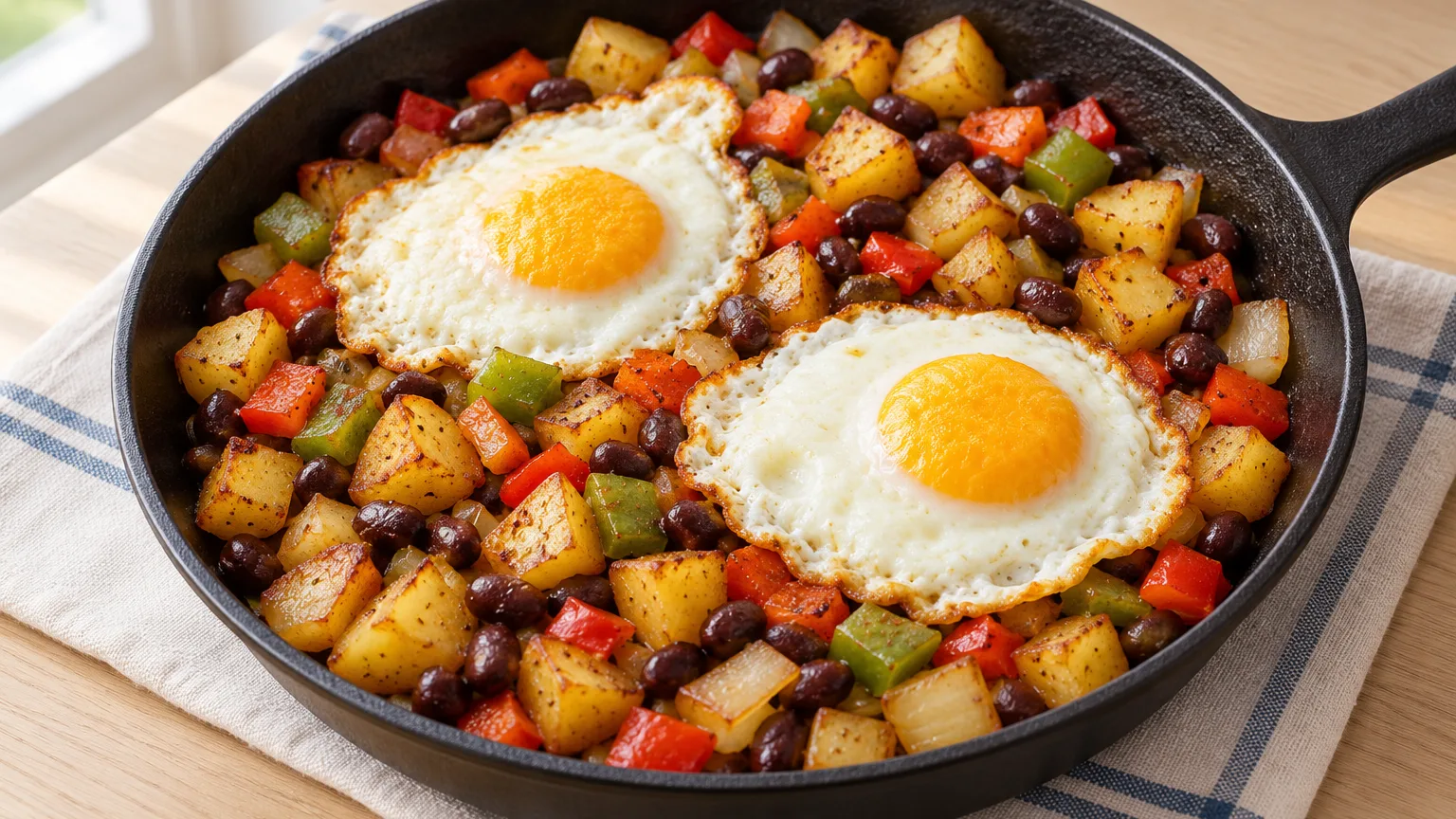

One pan can make dinner easier, provided the slow ingredient gets a head start. This potato, bean and egg skillet shows the order clearly. It uses no raw meat, so a beginner can focus on heat, space and timing while still checking that the eggs are fully cooked.
Cook the potatoes first
For two substantial plates, dice two medium potatoes into small, similar pieces. Put them in a wide skillet with a few tablespoons of water, cover and cook over medium heat until a fork enters the center easily. Add more water only if the pan dries before the potatoes soften. Uncover, let the water evaporate and add a little oil if you want browned edges. A large chunk of potato will not finish on the same schedule as a small one, so test a few pieces.
Set the lid slightly ajar when checking so steam escapes away from your hand. If the bottom begins to catch before the potato centers soften, lower the heat and add a small splash of water. Do not add more oil to a pan full of water and expect it to brown immediately. Once the water has evaporated, spread the pieces out and leave them briefly against the pan before turning. That gives them a chance to color without trying to cook the whole meal at a high heat.
Use potatoes of similar size so the quantities are predictable. If the two potatoes are unusually large, the skillet may be crowded; cook half now or use a larger pan. A pan that cannot hold the pieces in a shallow layer will steam the pieces and limit browning. Brown edges are optional, but tender centers are not.
Add the fast ingredients
Stir in one drained can of beans and a cup of frozen vegetables. Heat them through; frozen vegetables can release water, so let the pan dry again before adding eggs. Make two spaces in the mixture and crack an egg into each. Cover briefly and cook until both whites and yolks are firm, as FoodSafety.gov advises for eggs cooked in a pan. Spoon salsa onto the plates after cooking if you have it.
Crack each egg into a small cup before sliding it into a space in the pan. This gives you a chance to catch a shell fragment and makes placement easier near hot food. If the eggs spread across the vegetables, that is fine; check that no liquid white remains at serving. A lid can help the top cook without burning the potatoes beneath. If the bottom is browning too fast, lower the heat; repeatedly lifting the eggs can break them.
Use chilled rice for a different skillet
For a second dinner, start with two cups of already cooked rice that has been refrigerated promptly and kept cold. Heat it in a wide skillet with one drained can of beans, a cup of frozen greens and a splash of water, stirring until every part is hot. Add salsa at the table. This is a leftovers meal, not a method for leaving cooked rice at room temperature; if the rice sat out for hours, start with a fresh batch instead. A small skillet may need two batches so the center heats through.
Break up cold rice with a spoon before adding it so no clump stays cool in the middle. Follow the safe storage time for the cooked rice you are using, and reheat leftovers thoroughly. If you do not have cold cooked rice ready, make the potato version tonight or cook fresh rice by its package instructions and treat it as a separate step. The point of the alternate skillet is to use properly stored leftovers, not to create extra work or rescue food that was held unsafely.
Use the pan without crowding it
If the skillet is small, cook one egg at a time or divide the potato-bean mixture between plates first. Crowding makes it harder to see what is done. A nonstick or well-seasoned pan may need less oil; use a utensil that does not scratch its surface. Wash the pan after it cools enough to handle, before the starch dries onto it overnight.
For leftovers, save the potato-bean mixture separately and make fresh eggs when serving again. Refrigerate the cooked mixture in a shallow container within two hours, or one hour above 90°F (32°C); use most cooked leftovers within three to four days under USDA guidance.
Keep a note of the pan size and the actual yield. If two diners wanted seconds, the next batch may need another can of beans or a side vegetable. If food remained, label it for a specific lunch before cooking fresh eggs again. A one-pan dinner saves washing when the pan is big enough to cook the food evenly and the leftovers have a safe destination.
Use the pan surface as a capacity limit
Before heating, spread the uncooked potato pieces in the pan you plan to use. If they form a deep pile, reduce the batch or choose a wider pan approved for the burner. Crowding makes it harder to cook pieces evenly and leaves little room to stir beans or set eggs safely.
Keep raw egg utensils separate from the serving spoon. Verify doneness according to the food-safety guidance in the recipe, then move leftovers into shallow containers promptly. Record the pan size and potato cut so the result can be repeated without guessing from “one pan.”